~200–300 Wh
Phones, lights, a laptop
A power bank still wins if that is all you need.
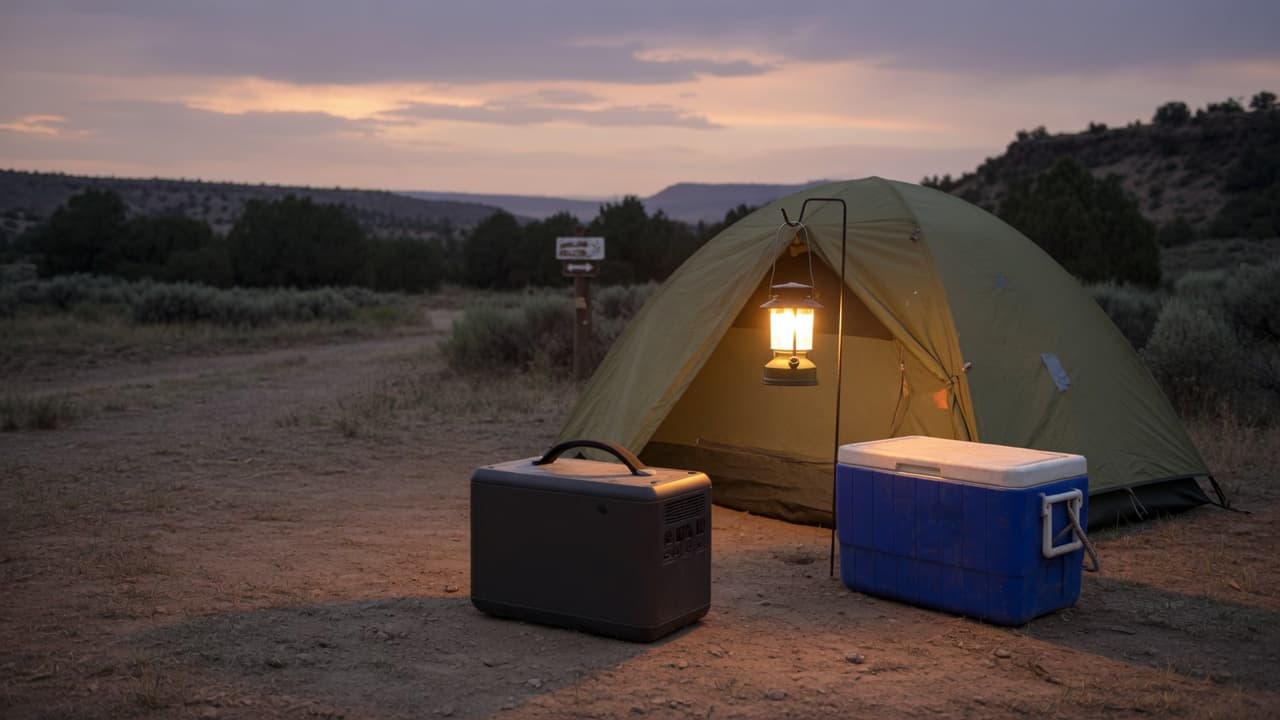
Portable power stations · amazon.com
Phones are not a fridge, and a fridge is not an RV air conditioner. Pack Current starts with watt-hours and continuous watts from the published sheet, then asks what you can actually carry.
As an Amazon Associate we earn from qualifying purchases.
Find a station
Four practical questions, then one pick from this set. Capacity (Wh) first, then continuous watts, then weight.
1What is the job?
2What do you need to run?
3How much weight will you carry?
4Do you want solar input?
Four short questions
Say what the job is, what you need to run, how much weight you will carry, and whether solar input matters. The pick comes from the stations on this site, using published watt-hours and continuous watts.
Manufacturer “runs a fridge for X hours” figures are usually a best-case load. Use the watt-hour number, then estimate against the watts you will actually draw.
~200–300 Wh
Phones, lights, a laptop
A power bank still wins if that is all you need.
~500–800 Wh
A small fridge or CPAP overnight
Duty cycle matters more than carton hours.
~1,000 Wh
Fridge plus lamps through a short outage
One kilowatt-hour is not a whole-house battery.
~1,500–2,000+ Wh
Van galley or longer home backup
Weight jumps. This size stays where you park it.